Latitude
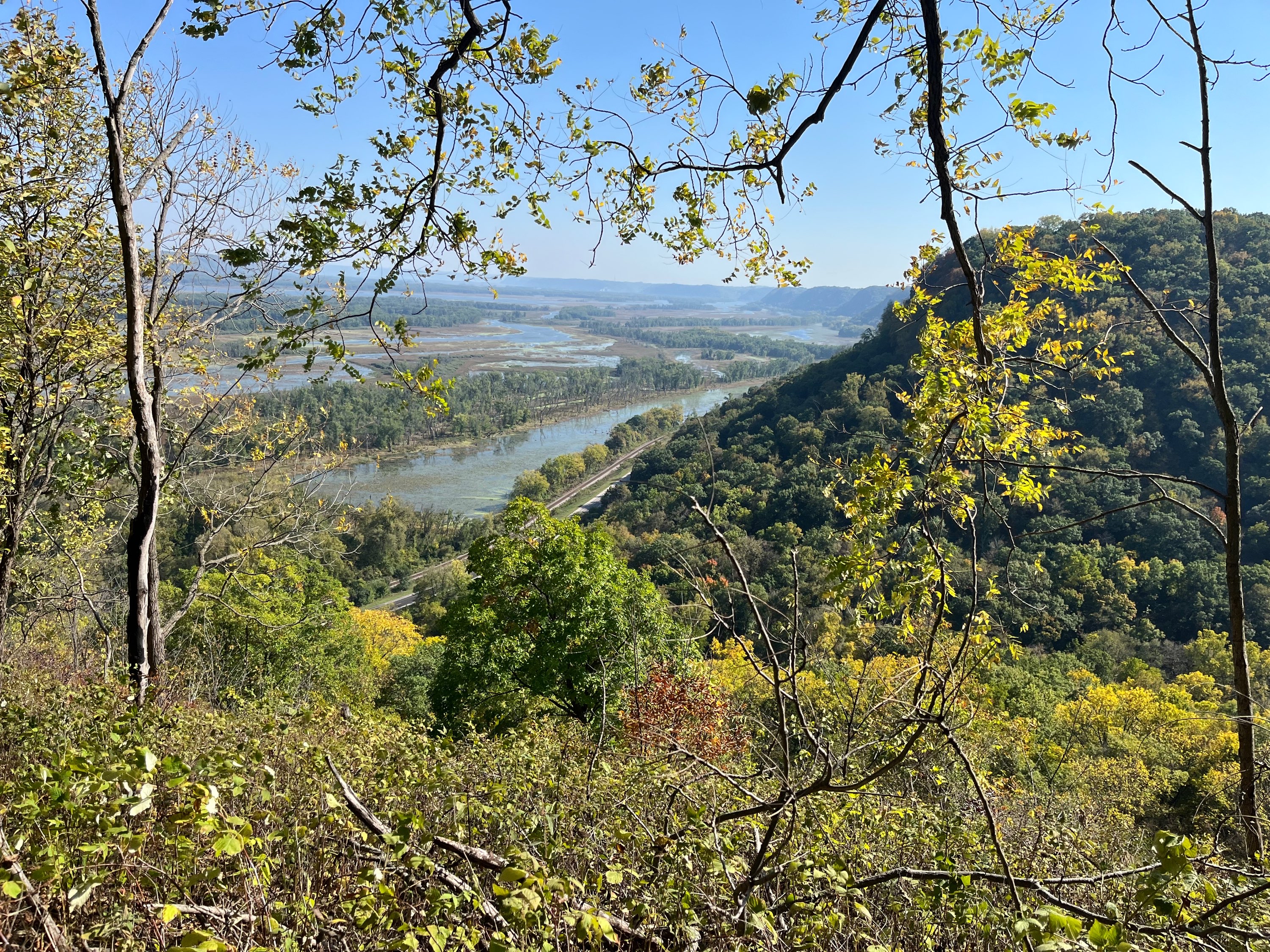
Latitude is “scope for freedom of action or thought”. It is also the “angular distance north or south of the earth’s equator”. Last week I exercised my latitude to go on the road to explore some distant latitudes. My journey from Iowisota (Lat. around 43.42) took me to Roseville, MN, (right by the 45th parallel), Namekagon Barrens in northern Wisconsin (Lat. around 46.11) and then all the way up the Gunflint Trail into the Boundary Waters Canoe Area (Lat. Around 48.09). The difference in latitude from south to north was nearly 325 miles. Iowisota’s longest day (June 21) has 35 minutes less daylight than the BWCA. I was intrigued by the differences—and similarities—that I observed in the various harsh environments I visited on my journey.
Iowisota has a very rich and diverse forest and a cool (hot?!) prairie, but no blueberries. I went north seeking blueberries. That’s why my son took me to the harsh environment of the Namekagon Barrens. On a sand plain, this area is managed with frequent prescribed fire to maintain habitat for sharp-tailed grouse and other wildlife among barren vegetation like jack pine, oak, sweetfern, hazelnut, blueberries, and a host of other “prairie” plants. Although we weren’t finding many blueberries, at some point I started snapping pictures of the amazing array of wildflowers. I can see butterfly weed, wild rose, goldenrod and harebells at Iowisota, but I don’t see wood lilies, Jersey tea and anise hyssop. There’s more to plant distribution than just latitude… it’s also soil conditions, disturbance regime, and seed source.


It is a long trek up the north shore of Lake Superior and then inland for another 25 miles on the Gunflint Trail to get to Adventurous Christians Camp (where my daughter works). I was mostly “in base” for 3 days, with a short excursion into the BWCA. Serviceberries (Saskatoons) were stealing the berry show on the Gunflint Trail. So abundant, so tasty! To celebrate abundance across a wide range of latitudes, I made the staff a cobbler with gooseberries from Iowisota, blueberries from the Namekagon barrens, and saskatoons from the camp: Sassy Blue Goose Cobbler. Yum.

There are a lot of plants that like disturbance and will grow along roadsides across wide latitudes. This includes non-natives (e.g. white sweetclover, oxeye daisies, etc.) as well as a variety of our “weedier” native plants. I have Common Evening Primrose (Oenothera biennis) growing in several disturbed areas at Iowisota, including right by my house. It was also blooming along the sandy roads of the Namekagon Barrens and along the Lima Grade off the Gunflint Trail. I find the evening primrose to be a useful plant: almost every part is edible. I like to nibble on the flowers; some of them don’t taste like much, but others give you a sweet fruity pop of flavor. My daughter stopped to pick a vaseful of cheerful yellow flowers for the lodge table. She may have been a bit disappointed when I mentioned that each blossom only lasts for one day! Some good things are like that.
Although I observed many cool plants and landforms on my journey, the best part of the trip was the time spent seeing my kids.
Event Update: We enjoyed a great workshop on prairies, fire and food by Samuel Thayer last weekend. Sam’s workshops are always packed with fantastic information, observations and stories; I hope we will have more next year. August is personally quite busy for us, so I haven’t scheduled events, but I still might add a pop-up hike somewhere in there. The “Wildcrafted Bitters” workshop on September 11th still has plenty of openings. I’d like to schedule some more activities/events for Fall. Do you have any requests or suggestions??
This post has wandered a bit, but hopefully there was some tidbit in there that piqued your curiosity, reminded you of wild things you’ve seen on your own adventures, or inspired you to go try something new. I wish you the latitude and opportunity to get out there and enjoy a wide range of experiences and landscapes!


Author's Note:
Gooseberry Cobbler recipe modified from a "cooks.com" internet version years ago:
Melt 1/2 cup butter in a 9 x 13 cake pan. Add 1/2 to 1 cup of sugar (depending on how sweet your fruit is). Add 1/4 cup flour. Mix in 1/2 cup water and 1 tsp of almond extract. Then stir in 4 cups of berries. Make a crumble topping from 1 cup flour, 1 cup sugar, 1 egg, and 1 TBS oil. Spread crumble topping over fruit mixture and bake 40 minutes at 375 degrees, or until golden brown and bubbly. Serve with whipped cream or ice cream to be really decadent.
Gooseberries and serviceberries (saskatoons) both go really nice with the almond flavoring. To…