Leave a Mark - Part 2
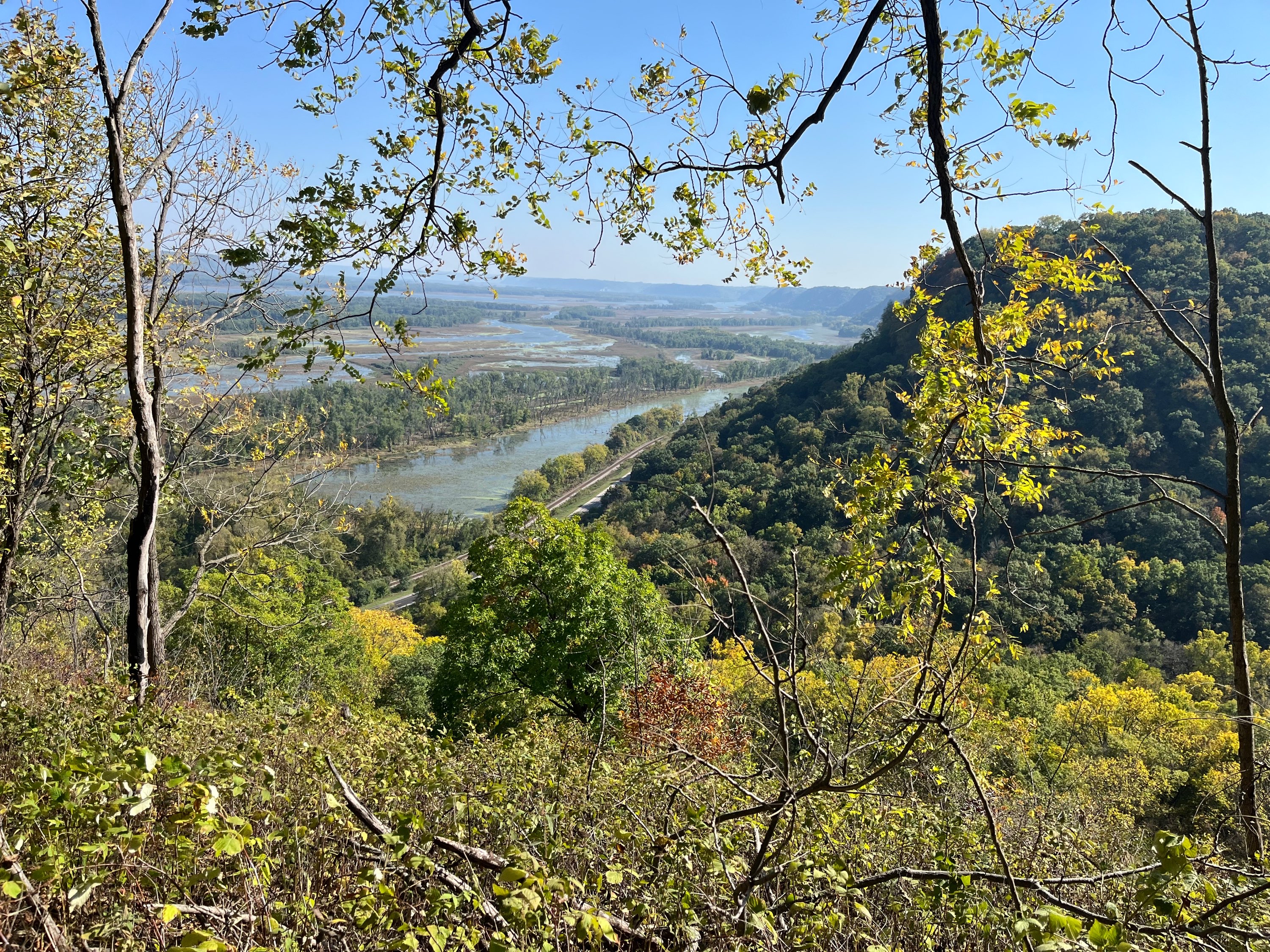
I wrote part 1 on a snowy day in January, about how tracks and marks left behind tell a story. I promised to follow up with a more in-depth discussion of how past management and activities shape the plants on the landscape. The forest cover at Iowisota is vastly different now than it was 95 years ago, due not only to the passage of time, but also due to the actions that were (or weren’t) done on the land during that time. I’m going to talk about several types of vegetation, how they got how they are, and where we want them to go in the future. I might go a bit past my target “3-minute-read” in my explanations this time!


Prairie and Savanna: In Iowa, most of the prairie areas have been converted to agriculture. Our landscape has lost a much greater proportion of our prairies than of our forests. The defining disturbance that keeps land in prairie (or savanna) is fire. Savannas are an in-between form of prairie, with large widely spaced trees that can survive fire. At Iowisota, our prairie (and savanna) areas were never tilled; they are too steep and rocky. Before settlement, most of the bluffs in northeast Iowa wore a green cape of prairie and savanna, because they burned frequently (especially the south and west facing slopes and the bluff tops). Without fire, the savannas become denser forest, and the prairies overgrew with brush, cedar, and birch. When you compare the aerial view photos above, you can see that we’ve lost all our savanna, and our prairie has shrunk. We re-introduced fire to the prairie in 2005, but our burns have been cautious. We haven’t let the fire go very far into the forest. Over the next 5 to 10 years, we hope to remove some of the tree stems and expand our burns on the south-facing slope, so that we can restore some savanna habitat. We want prairie and savanna because they hold unique and wonderful plants and provide a habitat that has become rare.

Early successional forests: When the valley at Iowisota and the field up on top of the bluff were no longer tilled, succession to trees began. It happened differently on different parts of the property, partially because of the soils, seed sources, and aspect. The moist soil in the valley became brushy, filled with brambles and bushes that trees began to grow up through. The field on the top of the bluff was colonized by sumac on one end and aspen and birch on the other end. In the 1970s and 1980s, there was much area in early successional stages: brush and young forest. There were also a lot of ruffed grouse and other wildlife that thrive in early successional forests. Over time, the valley succeeded to mixed hardwood forest. The sumac up on top grew old and died out, but black walnut, white ash and butternut grew in. The birch and aspen grew old and are dying out. Our “early successional” forests have aged out, and we don’t have ruffed grouse any longer. We are contemplating some areas where we might cut/harvest on a piece of the property in the next few years to reset succession and provide more of the early successional habitat.
Oak forests: Oaks and other mast producing (acorns, nuts) trees are important for wildlife. Oaks require a lot of sunlight to successfully regenerate, so usually they follow a major disturbance over a larger area (at least a couple of acres) that allows light to the forest floor. Currently at Iowisota we have a lot of oak forest, with many trees that are 80 to 120 years old. They probably became established after harvesting, land clearing, grazing, and fire suppression. As these oaks grow old and die, the next forest will contain less oaks and more maple, basswood, ironwood and other shade-tolerant species, unless we do something that will open up larger areas and disturb the soil. If we want to have future mast we will probably choose areas to do some patch clearcuts to regenerate young oak.

Mixed hardwood forest: Much of the land area of Iowisota is now covered with a diverse mixture of trees, including sugar maple, basswood, ironwood, red and American elm, red oak, hackberry, black walnut, black cherry, white ash, bitternut and shagbark hickory. The mix of which trees are present depends on site quality, aspect, seed availability, and length of time since disturbance. The rugged ravine area has been consistently forested since before the 1930s, and we intend to keep it in “old growth”, with trees living, dying and falling due to natural causes. Some of the best soils on the property are in the upper reaches of the valley along the north side of the ravine; this area started returning to forest around the 1970s and is now a nice area with a high proportion of mature sugar maples that provide me with sap to make syrup. Black walnut grows naturally in several places, providing potential for a future high value harvest. Our family (starting with my parents in the 1970s) harvested timber from the property, but we’ve always consulted with a forester to mark the sales. The forester considers our management objectives (to have high quality timber and trees well suited to the site) and marks the mature timber and “worst” trees for harvest, leaving the best young trees to be a good quality future stand and a seed source. Nature has been generous with the seed provided, we have been careful with what we’ve removed, and much time has passed, so we presently have a diverse mix of species over a large contiguous area. This is fantastic for a wide range of wildlife and songbirds.
Invasive species: People have moved a lot of plants into habitats where they did not originally occur. Some of it was intentional… like when Japanese knotweed and non-native honeysuckle bushes were planted by farmers for honeybees, or when multiflora rose, autumn olive, and Siberian elm were recommended for windbreaks, or when Japanese barberry and other “ornamentals” were planted in yards, or when garlic mustard, dame’s rocket, day lilies, and lilacs were planted on homestead gardens, or when crown vetch, sweet clover, and other ground covers were planted on roadside ditches. Some of these non-native plants behave better than others. Some become invasive problems that displace our native vegetation. At Iowisota, we have not escaped the curse of invasive plants, but we are fortunate to have fairly intact ecosystems. We battle primarily honeysuckle, Japanese knotweed, garlic mustard, and multiflora rose. Consistent efforts to remove the plants that don’t belong makes a difference; we haven’t eliminated all the “bad actors”, but we’re helping to tip the balance so the native plants continue to thrive.

It is important to have a mosaic of habitat types on the landscape to sustain the diversity of wildlife that has different needs. Some of our songbirds require large areas of contiguous forest. Some require a patchwork of forest ages. We need all of the parts on the landscape: early successional forests, oak forests, prairie and savanna, and mature hardwood forests. With informed and intentional actions on the land, the marks we leave can be helpful to nature, as well as providing an economic return through timber production.
We all leave a mark; what type will you leave?
If you are interested in history and the interaction between humans and our landscape, you may be interested in the upcoming talk Human History of the Upper Mississippi River by Christine Wellman Hall on June 28th.


Comments