Watershed Moment
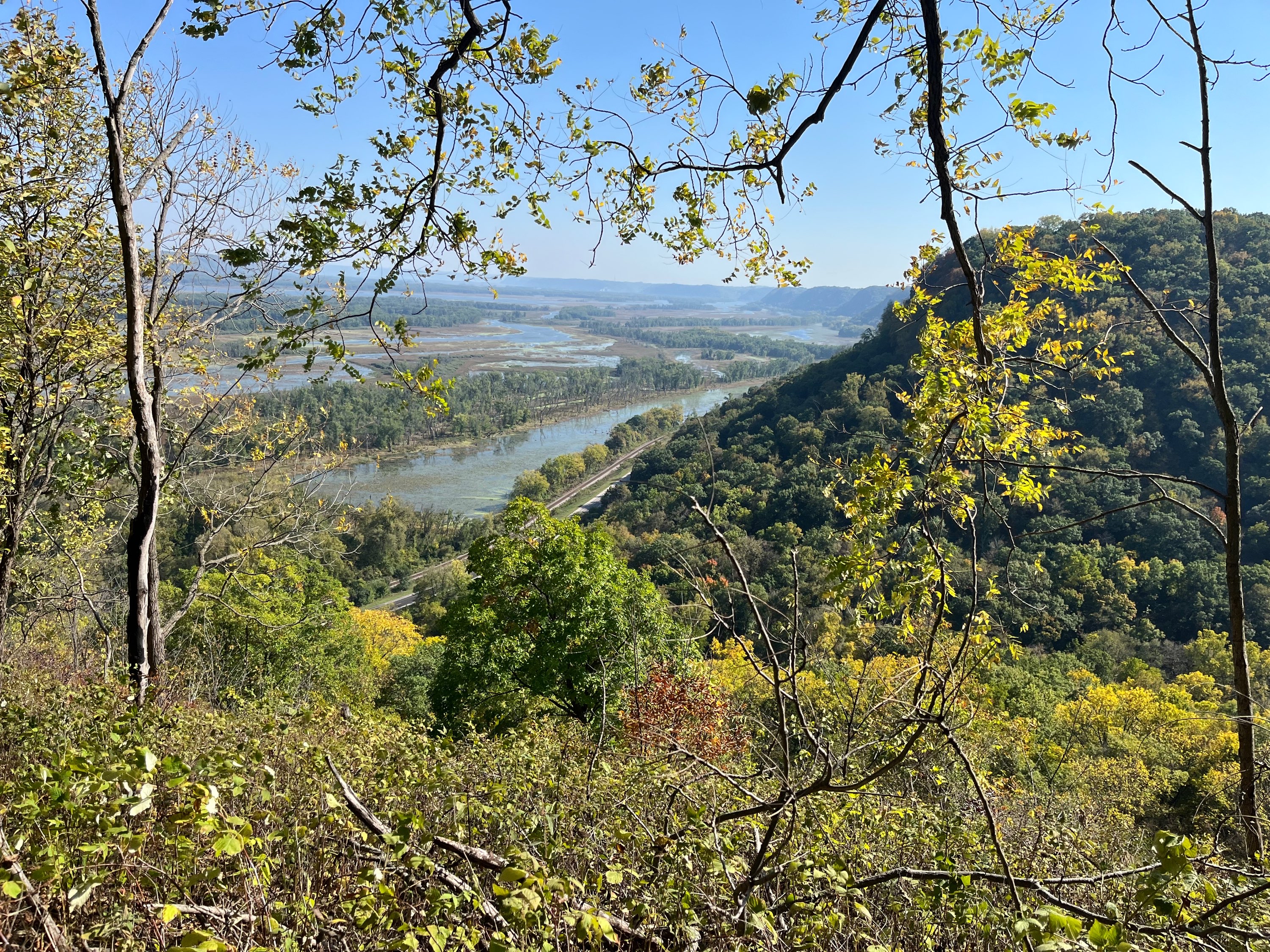

Water flows downhill. A watershed is the topographically defined area that water will flow from. It is the area that “sheds” water (depending on the scale you are considering) into a lake, gully, stream, or river system. The idiom “watershed moment” implies an event or point in time that changes history, and that too can be on many scales. I don’t expect this post to change history, but I do want to take a moment to talk about watersheds! My purpose here is to simulate your thinking and appreciation of water.

I just returned from the Boundary Waters Canoe Area Wilderness (BWCAW) in northern Minnesota. Minnesota is the source of three different watersheds: Some water flows through streams and smaller rivers to end up in the massive Mississippi River that flows down to the Gulf. Some water flows north or northwest into the Red and Rainy Rivers and on up to Hudson Bay. And some flows to Lake Superior and makes its way at a painstakingly slow pace through the Great Lakes toward the Atlantic Ocean. The point or ridge that divides watersheds is called a divide. When I was at Bow Lake at Adventurous Christians camp, I was in the Saint Lawrence Watershed (to Lake Superior), but as I drove farther up the Gunflint Trail, I crossed the Laurentian Divide. When I was paddling on Saganaga, Red Rock, Alpine and Seagull Lakes, I was in the Hudson Bay watershed. While driving home through Wisconsin, I was in the Upper Mississippi River watershed very shortly after leaving Duluth.


The “boundary waters” of the far north are starkly beautiful. There is so much bare rock, with relatively little capacity to buffer and remove contaminants. Paddlers in the wilderness are instructed to take meticulous care with their wastes to protect the waters. Human waste is kept at least 150’ from water to give soil microbes enough time and distance to clean it up. We even rinse dishes and bodies far from the water to keep soaps, detergents, sunscreen, and insect repellents out of the lakes. Nature itself adds tannins and natural soaps that leach from vegetation, but the system can handle that. What I was able to observe in the BWCA was very different from my daily view at home: different landscape (and waterscape), different climate, different plants.

At home, I am in the Upper Mississippi River watershed, in a very ecologically rich area right on the backwaters of the Mississippi River. The water that I drink is from an ancient aquifer buried deep in the Jordan Sandstone layer. There are also freshwater springs that seep through the rocks and trickle out at the base of the bluffs. These water sources are quite pure. The River itself is a mixture of local water and river flow, but the quality is at the mercy of what happens upstream. In many regards, the River is cleaner now than it was during my childhood. The daily view that I get to enjoy of the Upper Mississippi Watershed is a rich, diverse landscape of unsurpassed (at least in North America) diversity. I am so blessed.

Here in the Midwest, water seems endless and abundant. It is arguably our most important resource. We foul our waters in many ways: “forever” chemicals, pesticides, nitrates, acidic mine waste, heavy metals, siltation, etc. Perhaps our watershed moment is when we fail to protect our waters, but we might not recognize that moment until it is history. It is easy to point fingers of blame, but we all make daily choices that impact our water. Perhaps if we appreciate our water a bit more, we will make more water-friendly choices
On a lighter note, let’s circle back to upcoming events. I will be leading a focused work session (workshop) to make your own stoneware charcuterie board this coming Sunday afternoon (August 30th). On Thursday afternoon/evening September 10th, Bo Brown will be our guest expert to lead a foraging hike and mostly-wild food dinner. This will be a great opportunity to taste a wide variety of wild-harvested foods prepared in various ways, and to hang out with crazy foraging folks. If that sounds like you, sign up soon! My next “Women’s Walk in the Woods” are scheduled for September 15th and October 18th. I'm still considering what I'll add after that.


Comments